
Blue Hill Ave Is Changing. The City Says It Heard the Community. Now the Community Gets to Judge.
by James “Jimmy” Hills
I just got out of a media briefing on the latest version of the Blue Hill Avenue Transportation Action Plan, and if there was one message city and state leaders wanted to make clear, it was this:
They believe the community has been heard.
Now the question is whether the people who live, work, worship, shop and travel along Blue Hill Avenue will agree.
State Representative Russell Holmes has been part of this conversation from the beginning, long before the debate around center-running bus lanes became what it is today. During the briefing, he repeatedly brought the conversation back to something bigger than buses.
Holmes said the goal now is to look at Blue Hill Avenue as a complete corridor and find solutions “block by block,” considering businesses, residents, bus riders, bus drivers, pedestrians, cyclists and motorists.
He described the challenge as figuring out how to take the existing roadway and “accommodate a road that is not just for cars predominantly, which is what it’s designed for today, but for all of us.”
That means riders, walkers, bikers, drivers, businesses and the people who actually call the neighborhoods along Blue Hill Avenue home.
Holmes said the project has moved beyond simply having “a busway discussion” toward what officials are calling “a boulevard discussion that literally is from one sidewalk to the other sidewalk all along these three miles.”
That distinction is important.
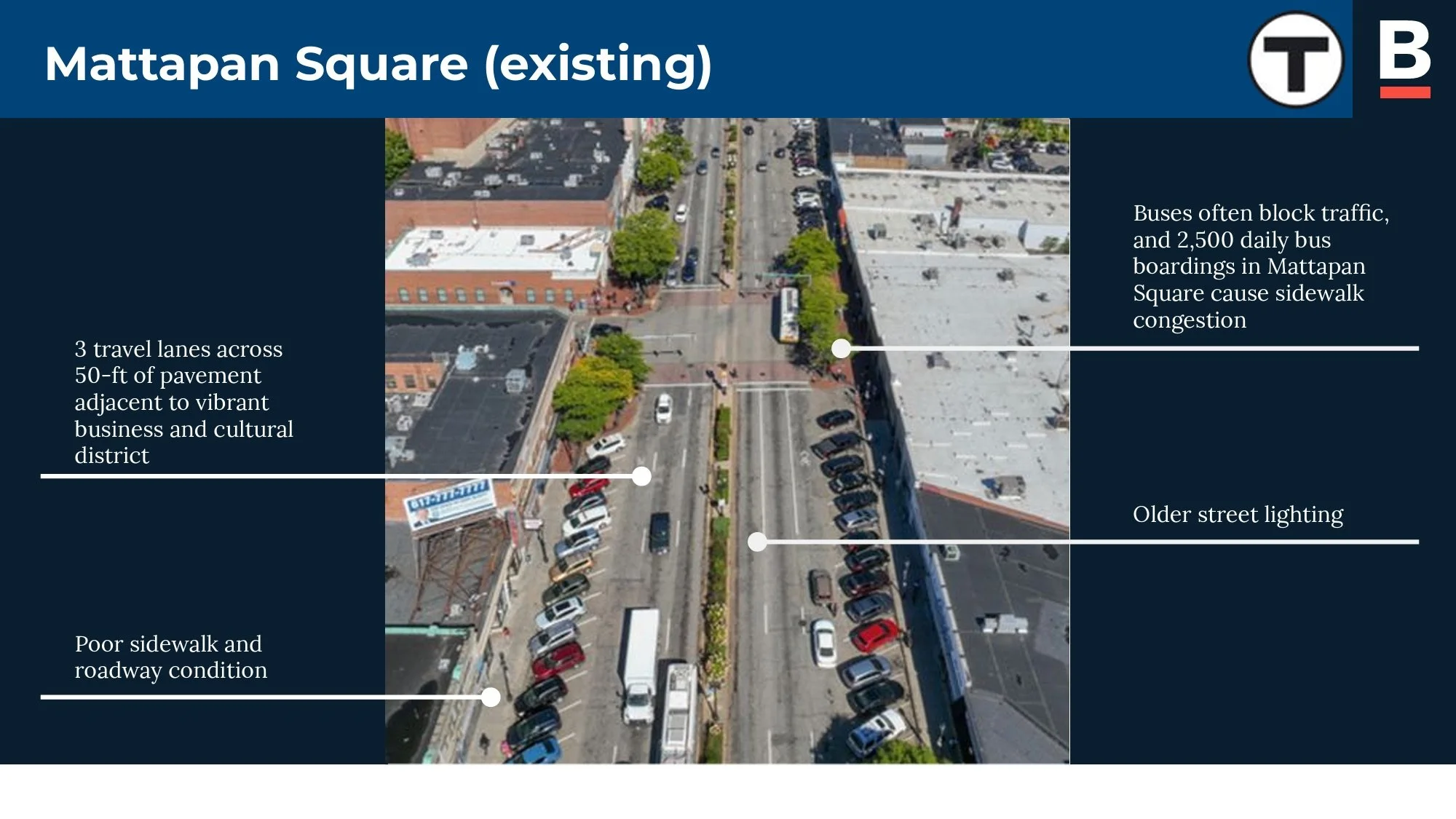
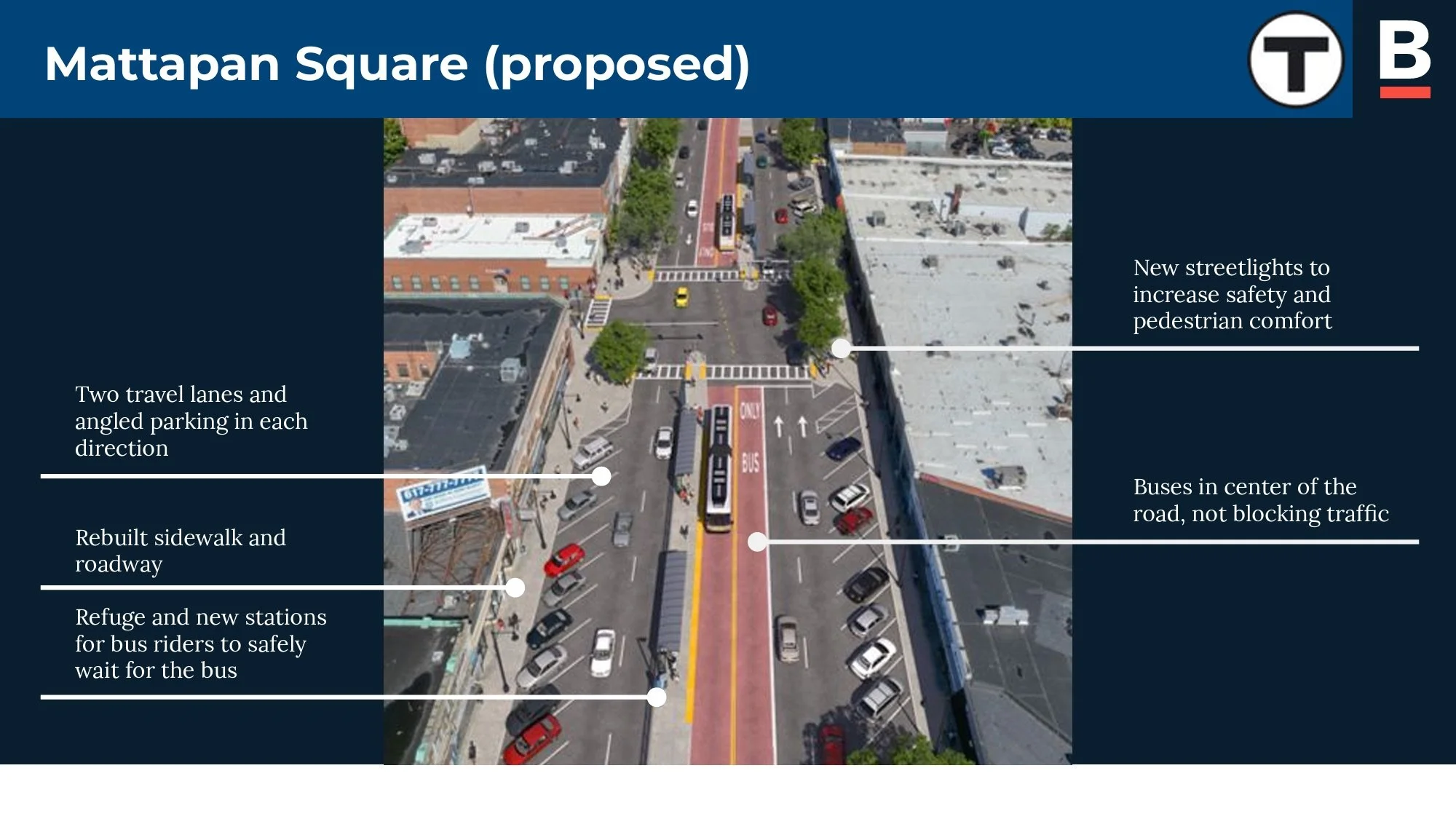
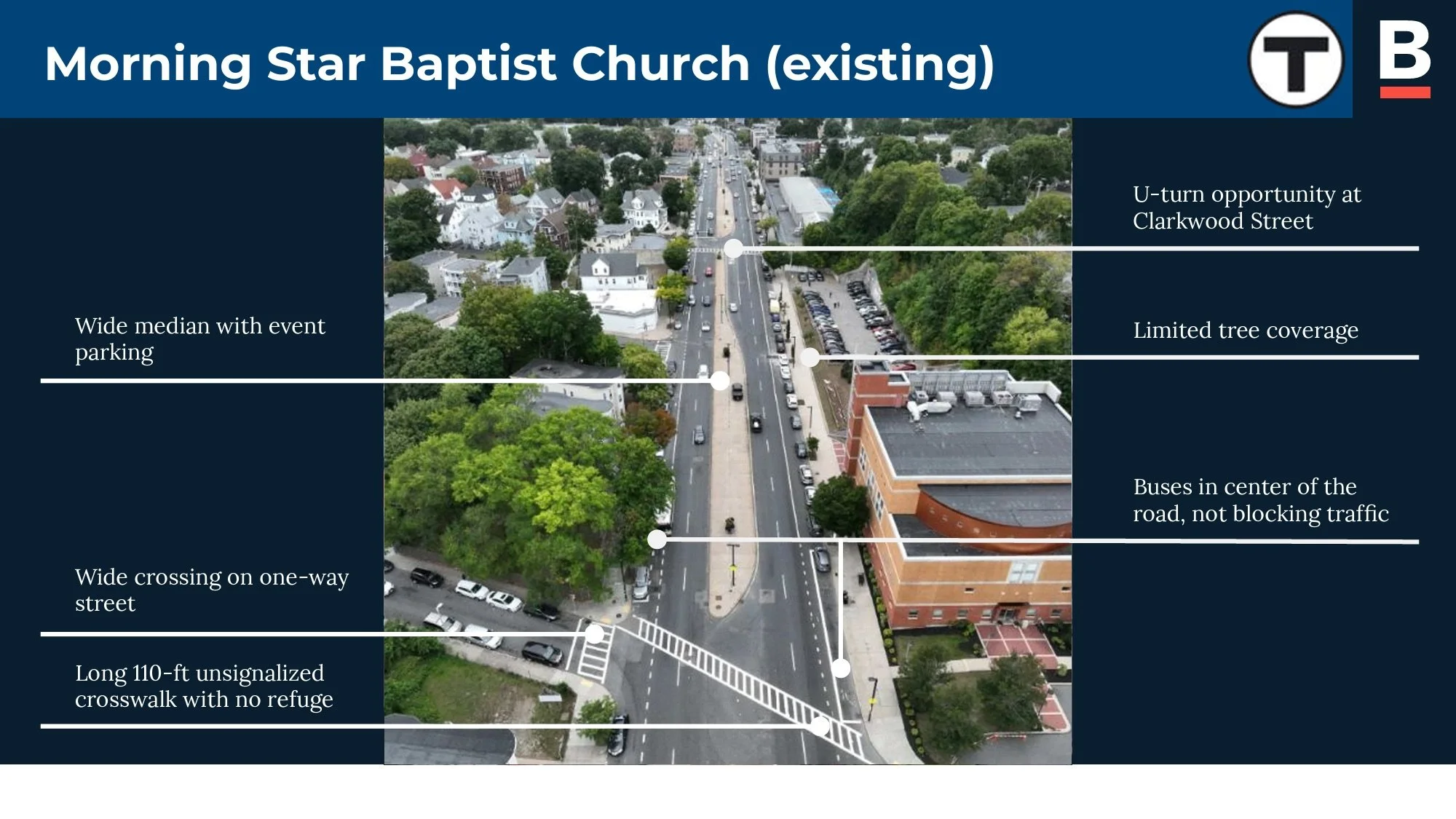
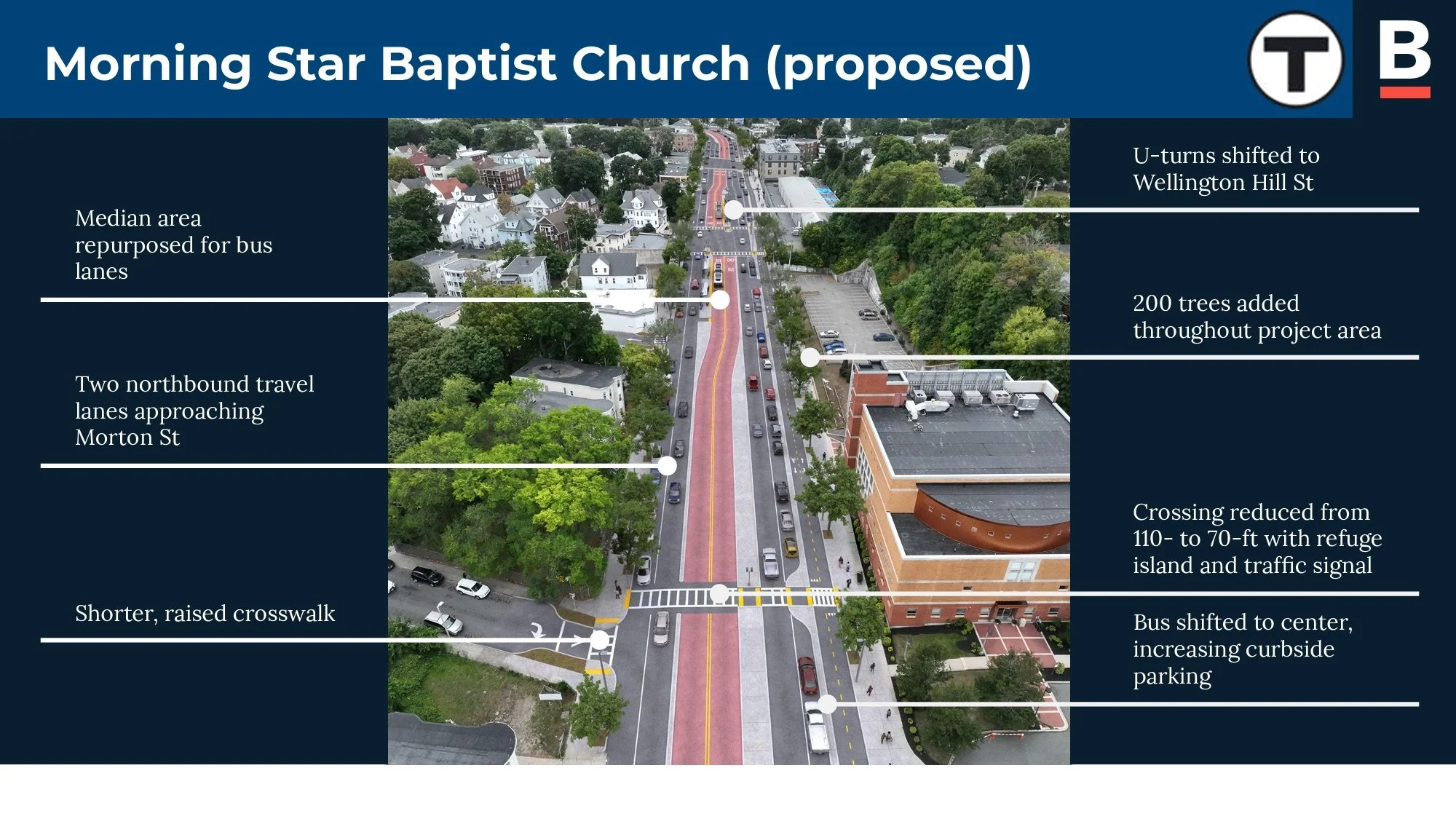
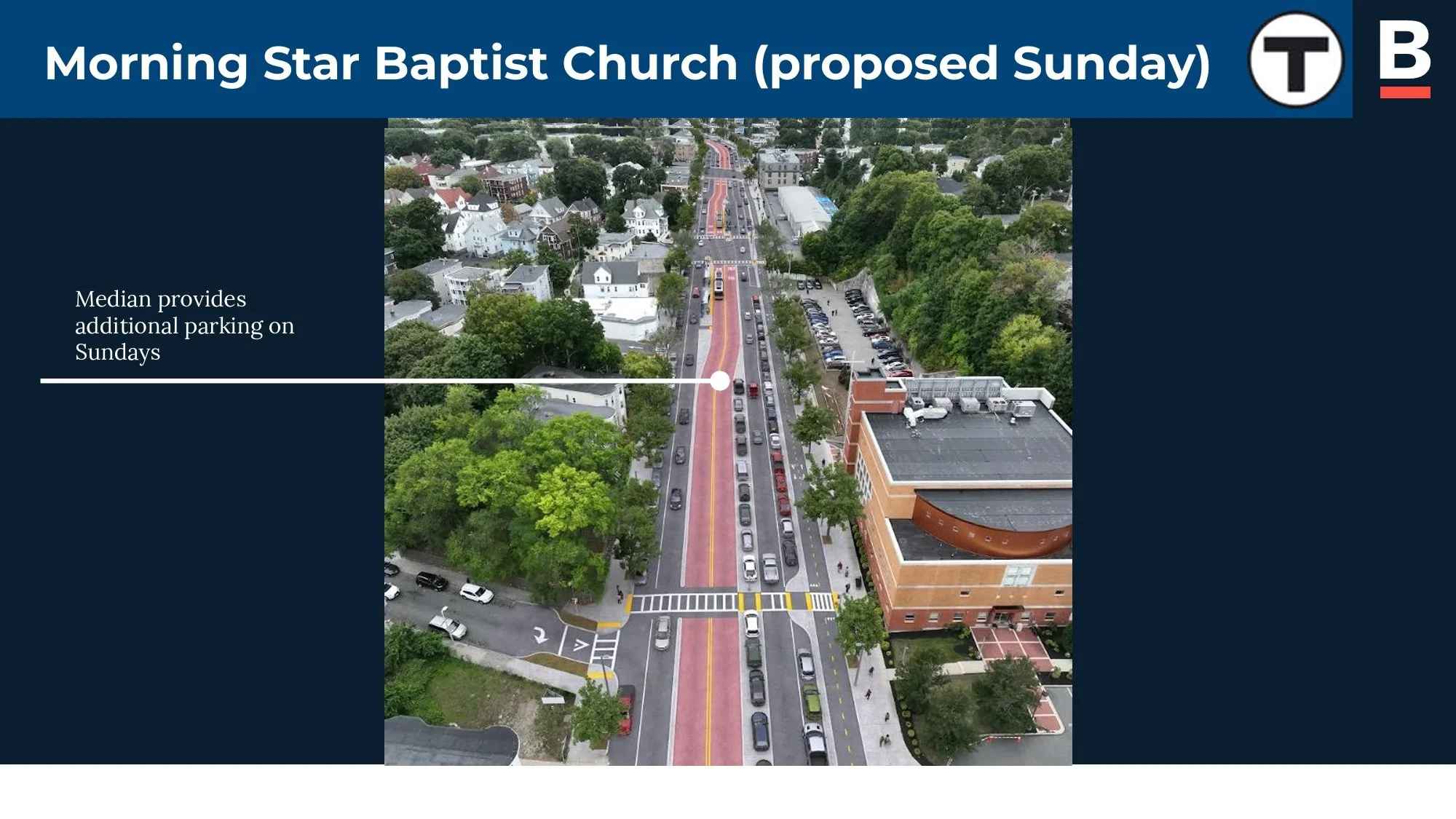
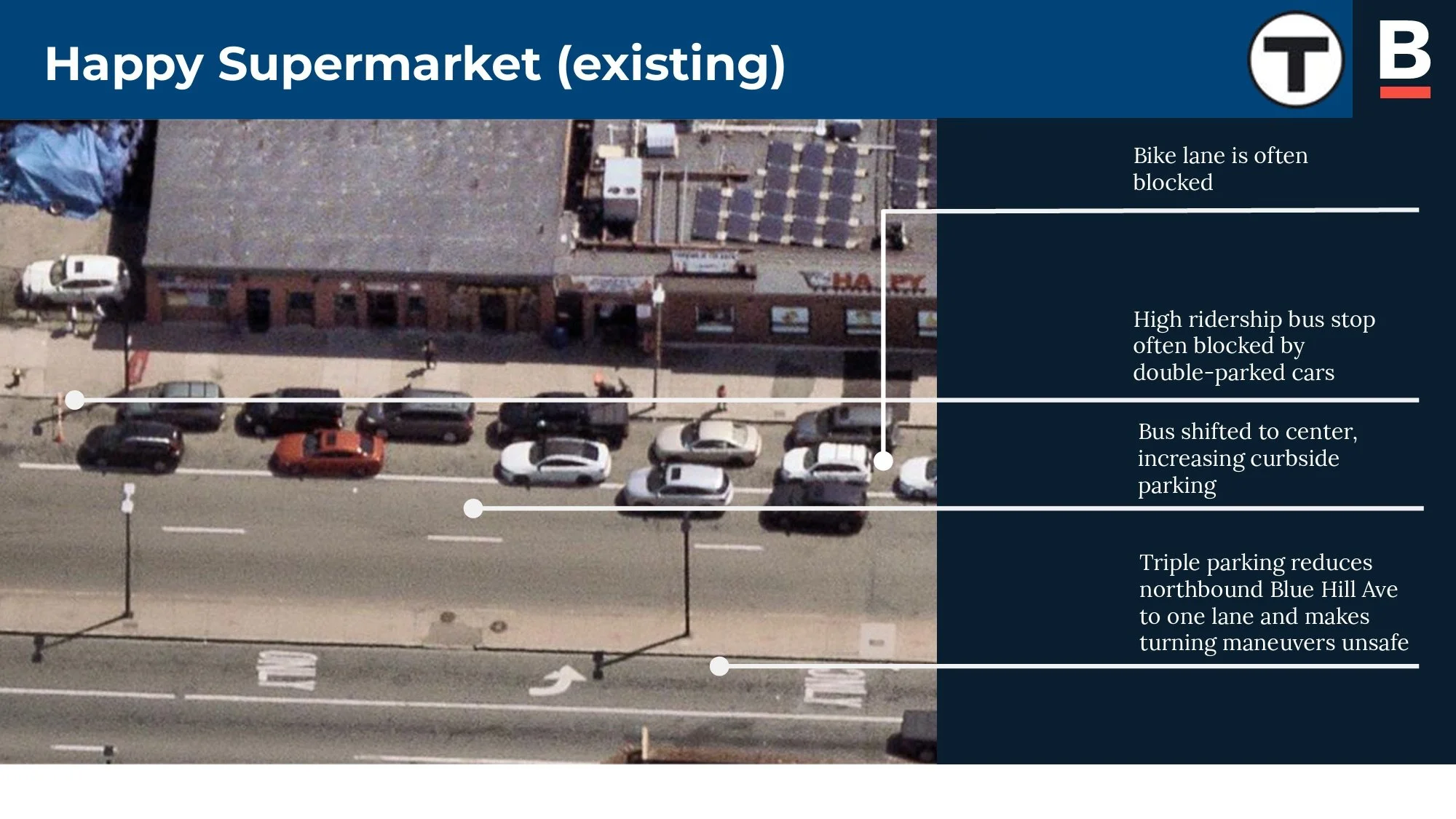
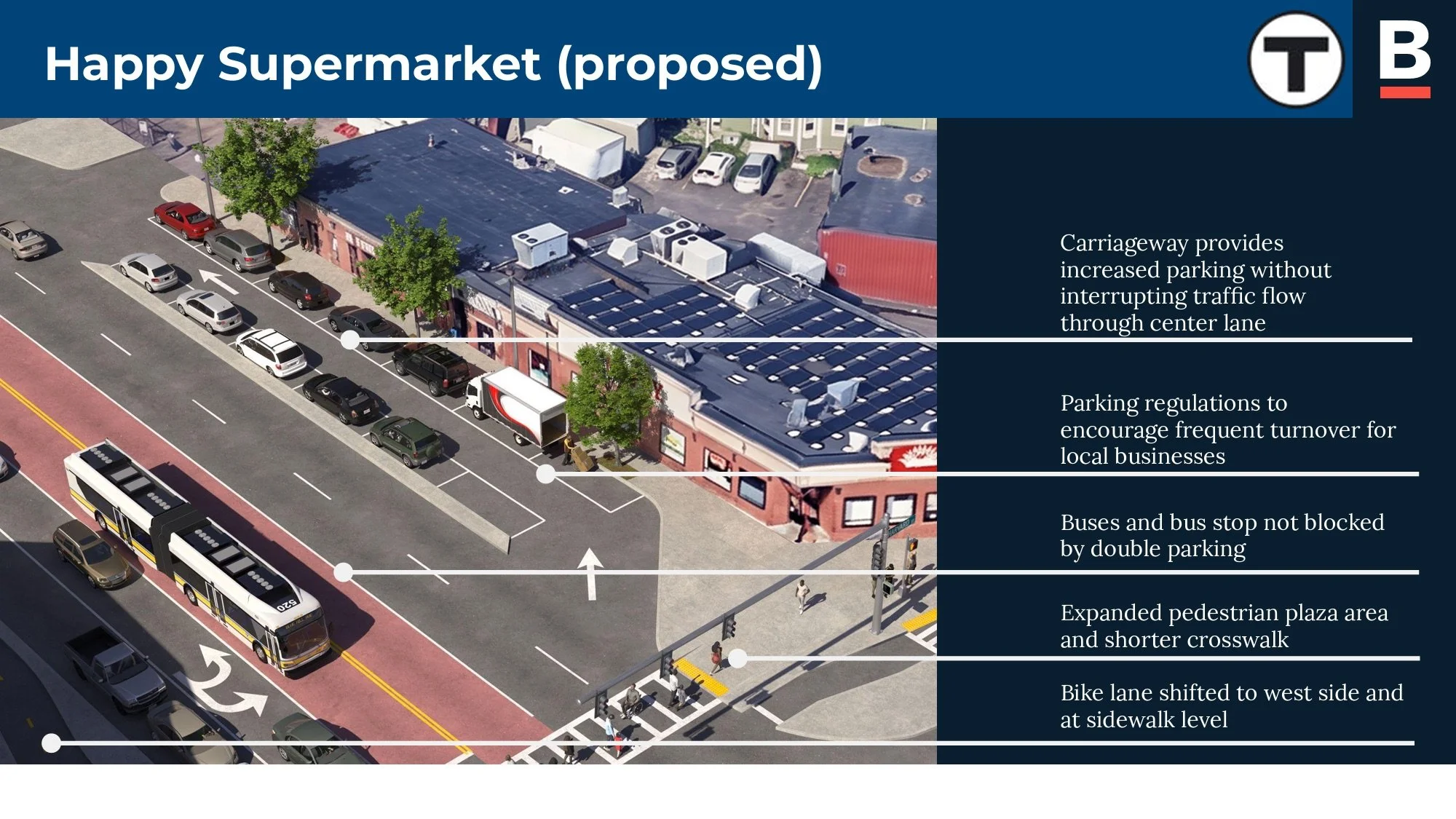
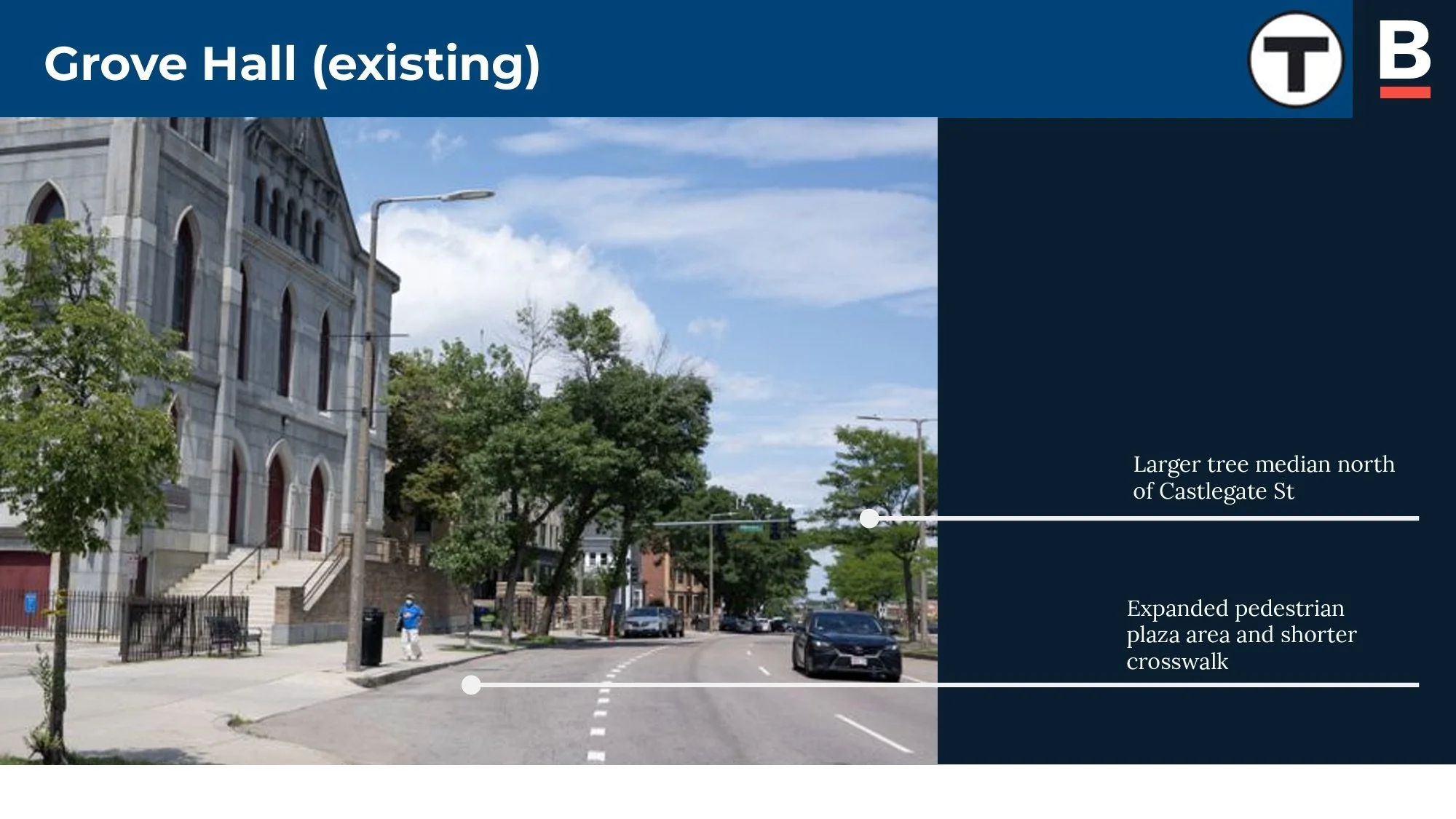
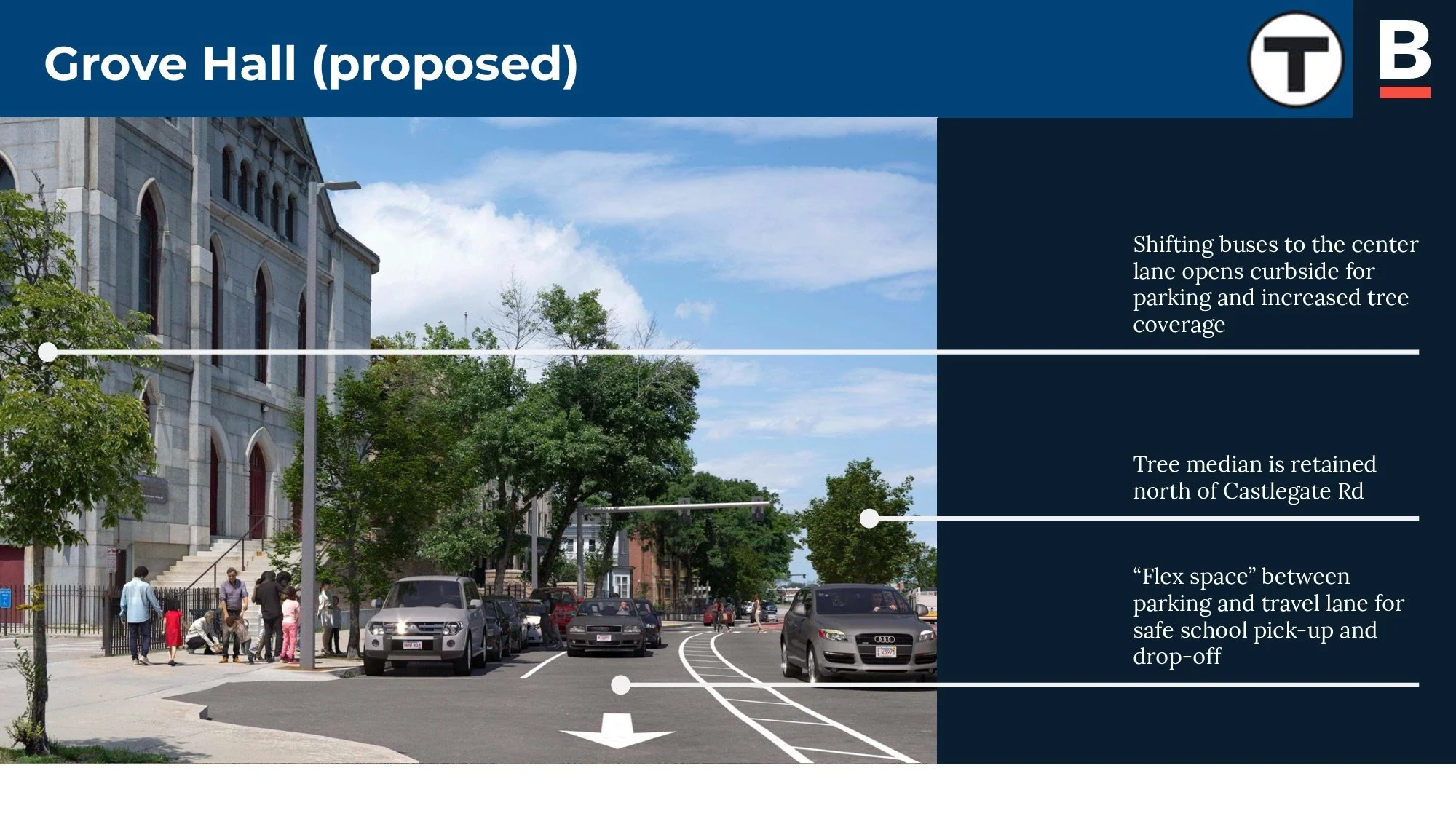
Boston Chief of Streets Chris Osgood laid out a proposal that is now roughly a $160 million investment, substantially larger than the approximately $40 million that had previously been available. The updated project includes a complete roadway reconstruction, six miles of rebuilt sidewalks covering both sides of the three-mile corridor, new streetlights, approximately 200 new street trees, 200 accessible curb and pedestrian ramps, safer crossings, traffic signal upgrades, a sidewalk-level two-way bicycle path and center-running bus lanes.
Osgood called it a “generational investment that improves the daily lives of everybody who uses Blue Hill Avenue and said the work has been shaped by years of community engagement.
He also made the broader goal clear: “Whether you walk, bike, bus, or drive, we are making investments that can make that experience better for you.”
And there is a reason the safety conversation is significant.
According to Osgood, Blue Hill Avenue currently sees “a crash on the corridor roughly every three days,” placing it among the city’s corridors with the highest concentrations of crashes per mile.
At the same time, this three-mile stretch carries some of the heaviest bus ridership in the entire MBTA system, with more than 40,000 riders using the corridor and more than half of travelers during key rush hour periods riding the bus.
For Osgood, that is part of why the redesign cannot simply be viewed as a transit project.
“This project isn’t just a bus lane project, but it’s a boulevard project,” he said, pointing to the much larger investment in streetlights, roadway reconstruction, traffic signals, sidewalks, trees and other infrastructure surrounding the transit improvements.
But this updated proposal is also clearly an attempt to respond to some of the loudest concerns raised during the previous round of community engagement.
One of those concerns was reducing too much of Blue Hill Avenue to one general travel lane.
That has changed.
Osgood said approximately 70 percent of the corridor would now maintain two general travel lanes in each direction, with the project team continuing to study signal timing, turns, and traffic flow between Mattapan Square and Grove Hall.
And Holmes offered a very specific example of what officials have been hearing in recent conversations.
He described one business owner who had been strongly opposed to the project but reacted differently after seeing the revised plans.
According to Holmes, she told them: “One of my biggest concerns was we were going to go down to one lane everywhere, and I knew that was going to cause a bottleneck.”
After seeing the updated design, Holmes said her response changed: “I am very pleased to know that I was heard.”
That brought me to the question I asked Holmes directly during the briefing.
How confident was he, on a grading scale, that the community would look at this updated proposal and actually feel heard?
Holmes did not give it an A.
“I will say B plus or B,” he told me.
And he explained why.
There are still people, Holmes acknowledged, who remain firmly opposed to center-running bus lanes and may not be moved by the changes being proposed.
“Certainly not an A yet,” Holmes said, because there are still people on the other side of the debate who, in his view, may not hear the other changes being made because of their opposition to the center-running bus plan.
I actually think that honesty matters.
This project has generated strong opinions for years. Nobody should expect one revised presentation to erase those concerns. But what this latest proposal does show is that some of the major issues raised by residents and businesses have resulted in changes.
And that is exactly why these upcoming community meetings matter.
The city is not presenting this as the finished product. This is the 30 percent design, and officials say the next phase of engagement will get even more specific, looking at the corridor block by block and asking residents what works and what still needs to change.
The design is expected to continue being refined through 2027, with construction potentially moving toward bidding as early as 2028.
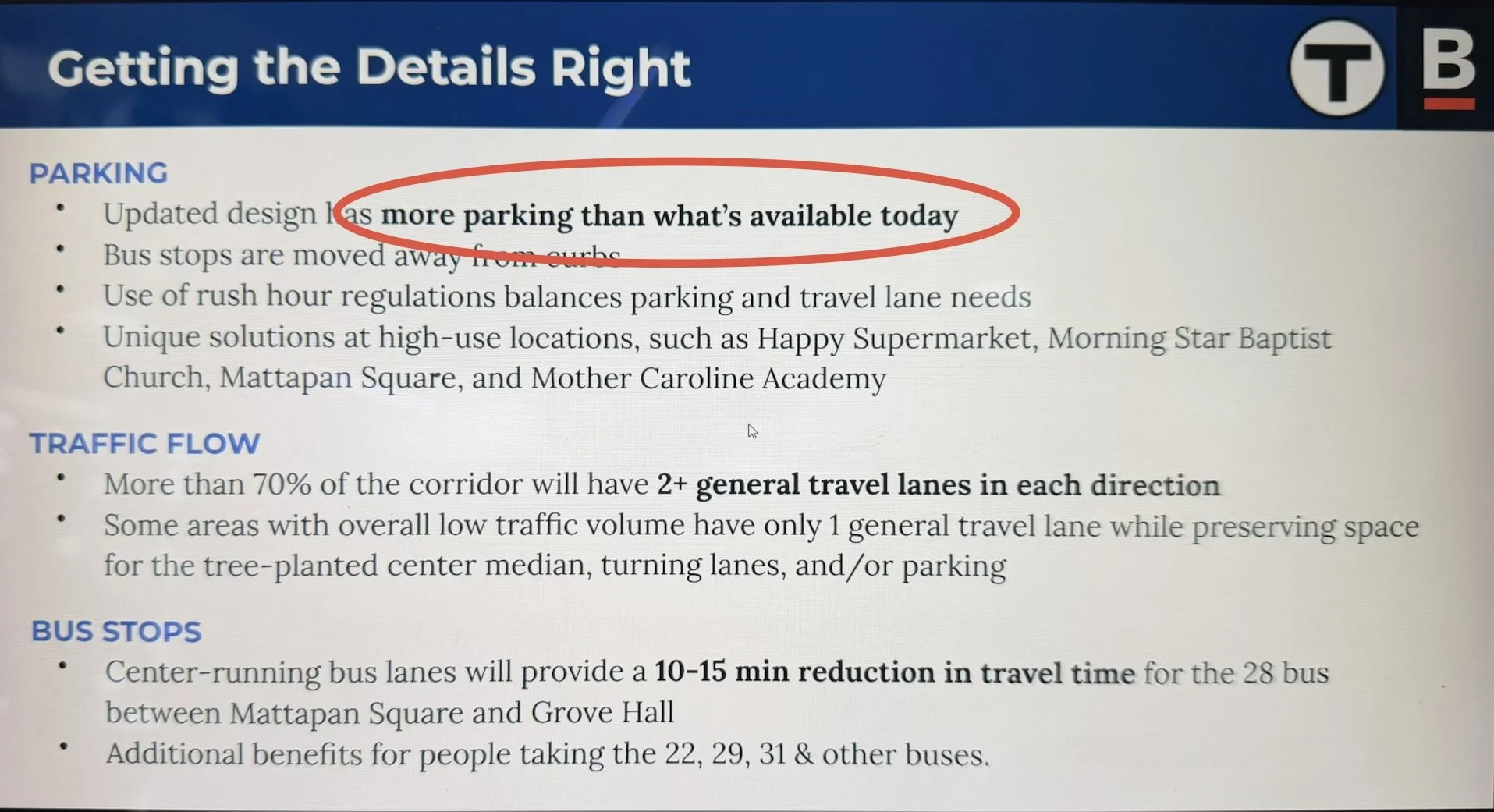
And yes, parking.
Because I know somebody is already asking.
The updated plan proposes more curbside parking and loading capacity overall, largely because moving bus stops from the curb into center stations opens additional curb space.
Holmes repeatedly stressed that point during the briefing, saying, “We are moving the parking spots and giving them back to you in front of your business.”
Officials discussed roughly 40 additional spaces or curb uses, with Holmes citing approximately 42 during the conversation, although not every space would necessarily function as traditional all-day parking.
The design also gets much more specific about what businesses actually need. That could mean short-term parking, loading zones, pickup and drop-off areas, or longer-term parking depending on the block.
At Mother Caroline Academy, for example, the redesign currently proposes five new parking spaces along with a new pickup and drop-off area.
That is why people need to show up now.
You do not have to love every piece of this project to participate in shaping it.
But Blue Hill Avenue is one of the most important Black commercial, residential, cultural, and transportation corridors in Boston. If we are talking about spending more than $160 million to fundamentally reshape it for another generation, the people who actually use Blue Hill Avenue every day need to be in the room.
UPCOMING BLUE HILL AVENUE COMMUNITY MEETINGS
Thursday, September 10 | 6:30 to 8:00 PM
Morning Star Baptist Church
1257 Blue Hill Avenue, Mattapan
Monday, September 14 | 6:30 to 8:00 PM
BCYF Perkins Community Center
155 Talbot Avenue, Dorchester
Tuesday, September 22 | 6:00 to 7:30 PM
Mattapan Branch Library
1350 Blue Hill Avenue, Mattapan
Wednesday, September 30 | 6:30 to 8:00 PM
BCYF Holland
85 Olney Street, Boston
The City and MBTA say residents will have opportunities to examine the design in greater detail and weigh in on issues including lighting, trees, parking regulations, bus stations, small business needs, and what individual blocks along the corridor should ultimately look like.
This is the part of the process where showing up mattered and still matters.