
by James “Jimmy” Hills
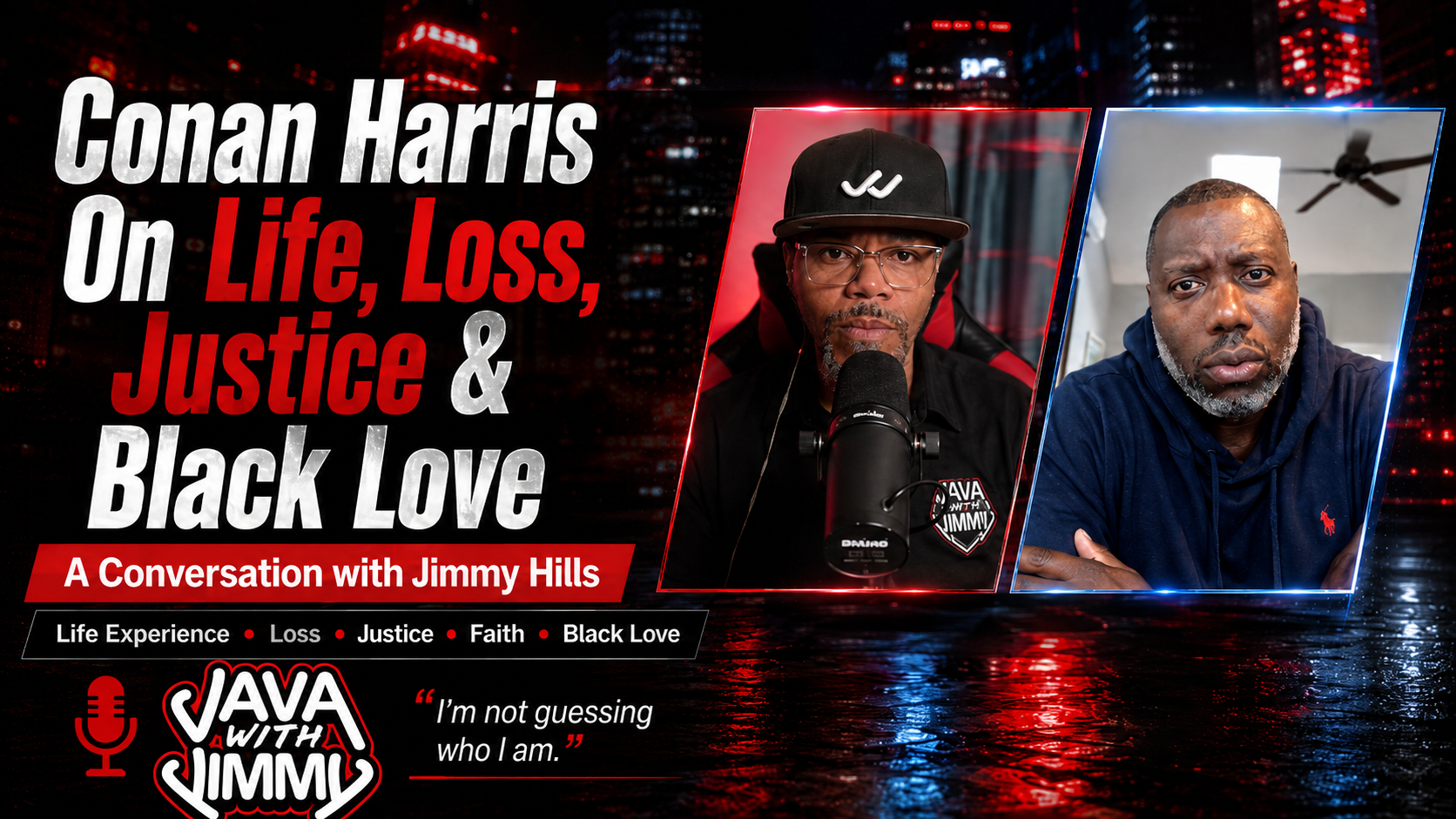
Earlier today, I sat down with Conan Harris for a conversation that was really about getting beyond the headlines and allowing people to hear directly from a man I have known for well over a decade.
Conan has lived a lot of life. Born and raised in Dorchester with roots in Cambridge and Roxbury, he spoke openly about his younger years, neighborhood violence, incarceration and eventually finding his way into community work, philanthropy, government and public safety. He has worked directly with young people involved in violence, built businesses, invested in property, raised his daughter and built a life with his wife, Congresswoman Ayanna Pressley.
That experience is part of why Conan said he has not felt the need to respond to everything written or said about him lately. As he put it, “I’m not guessing who I am.” He knows what he has lived through, the work he has done and the man he has become. Some things sting, he acknowledged, but he is not interested in trying to settle every conflict on social media.
There was one situation, however, that hit differently.
When young Yoseliani Marty was killed at a property Conan owns, he said his reaction was rooted both in his years of public safety work and in being a father who was preparing to send his own daughter to college.
“It hurt,” he told me.
What bothered him even more was watching the tragedy become intertwined with politics and stories about his family. Conan repeatedly brought the conversation back to Yoseliani, her parents, and the loss of “a young precious life, a young life that mattered.”
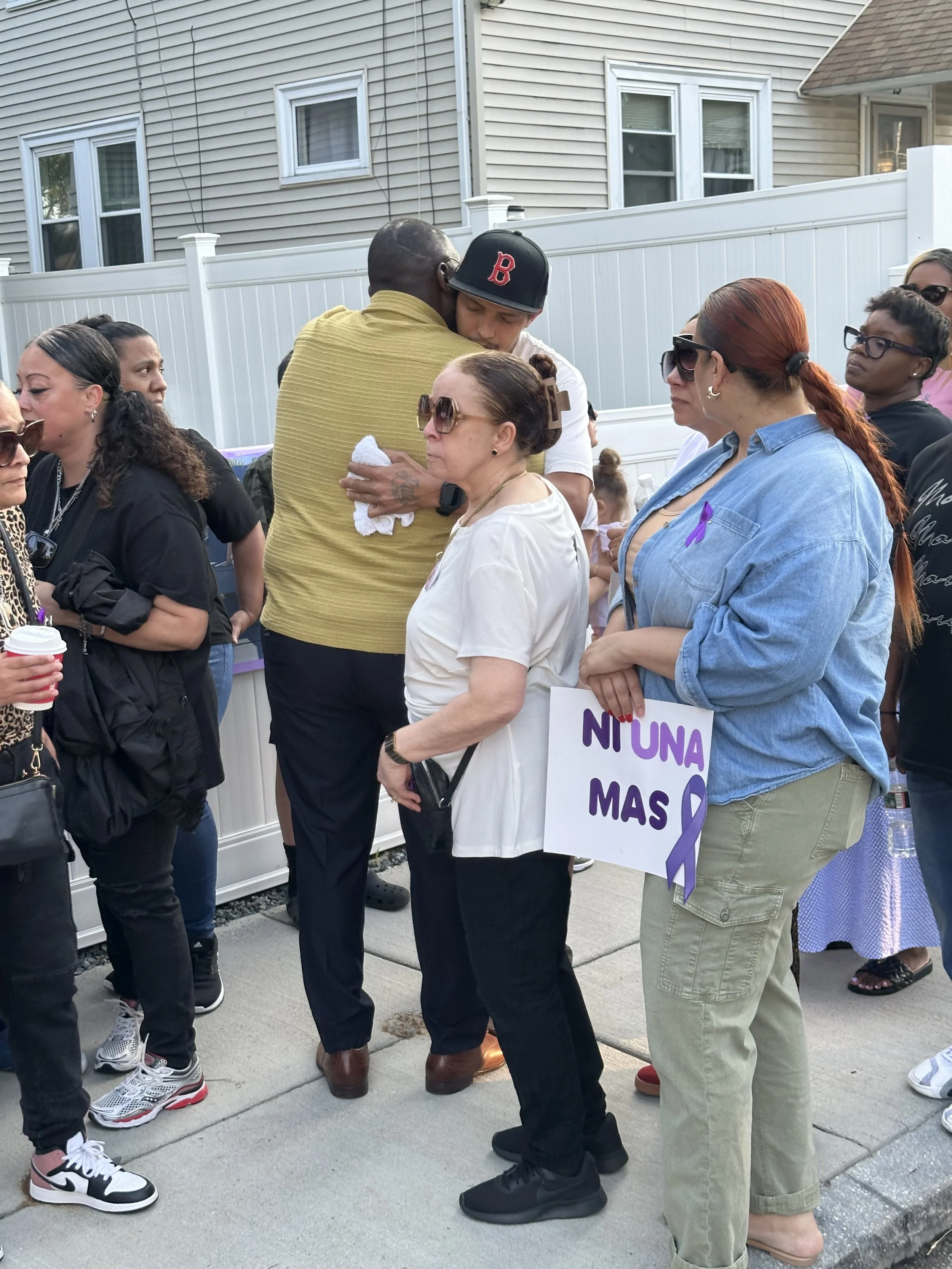
Conan embracing Yoseliani Father
I was at the memorial and watched Conan engage with the family and community. He talked earlier today about his public safety instincts kicking in, connecting with trauma response partners and making sure the family was supported. For him, that was where the attention belonged: on a grieving family and a community wrapping around them.
Our conversation then moved into the development project that has also put Conan’s name in the headlines.
After a judge rejected an attempt to stop the project, Conan called the ruling “justice.” I asked him directly what he meant by that.
For Conan, justice was about clarification. He said the narrative surrounding the project suggested that something improper had happened between him and his business partner, John Barros. The ruling, in his view, provided an opportunity for the facts to speak louder than the accusations.
“What they did was they used the same platform that they tried to do from a negative standpoint to then clarify to folks that there was nothing nefarious in place. And that’s justice all day.”
But there was another layer to what justice meant to him.
Conan talked about the reality of being a Black man pursuing major development opportunities in a state where Black ownership of large projects remains limited. He said Black business owners often enter these spaces knowing they will face additional scrutiny, and that means doing the homework, building strong partnerships and making sure everything is handled correctly.
He also made clear that he sees these opportunities as larger than himself.
For Conan, economic justice includes Black and Brown workers getting jobs, contracts and meaningful opportunities as projects move forward. He was careful to say that nothing has been built yet and no money has been made, but the possibility itself matters because it allows others to see what can be pursued.
“We deserve to go after it.”
That idea came up again when I asked him about being defined publicly through his marriage.
With everything he accomplished before getting married, I asked whether it frustrated him when people reduced him to simply, “That’s Ayanna Pressley’s husband.”
His response was one of my favorite moments of the conversation.
“They’re right. That’s my wife. That is my wife. I’m not running from that even a little bit.”
There was no insecurity in his answer and no attempt to separate himself from her success to prove his own.
Conan talked about supporting Ayanna in what he believes God placed her here to do while continuing to pursue his own purpose. Later, when I asked how they protect their marriage, he spoke about prayer, friendship, being intentional with one another and remembering that away from politics and public life, they are simply two people who love each other, laugh together, pray together and come home to each other.
That same grounding carries into the way Conan talks about fatherhood and his own evolution.
He described growing up in a world where survival often came before dreaming about what life could become. As he matured, survival turned into something more.
“You get out of that place of survival, when you get into that place of thriving, you go into a different phase and now you’re experiencing life and you ain’t just going through it.”
I have known Conan for well over a decade, and earlier today there was a moment when I became emotional because I realized I have actually watched some of that evolution.
The brother talking about business ownership, fatherhood, marriage, faith, and purpose is also the brother who can speak honestly about incarceration, violence, and the life he lived before any headline knew his name.
This was the conversation I wanted people to hear.
Not simply the latest controversy. Not simply politics. Not simply a business deal.
I wanted people to hear how a lifetime of experience shapes the way Conan Harris responds to loss, opportunity, scrutiny, family, and what he believes justice should look like.
Through it all, his message was clear and consistent.
Know who you are. Do the work. Keep growing. Bring people with you and do not apologize for believing you belong in spaces where people may not be used to seeing you.