
The PEOPLE, the Process and Policy … Accountability in Action
By James “Jimmy” Hills
There is a difference between talking to people and giving people a real voice. You can hold meetings and ask people what they think. But the real question is: Did what people said change anything?
That matters in Boston. It matters even more in Black Boston.
Over the last few months, I have been listening, asking questions, and this weekend, I talked with a couple of residents and elected leaders. Blue Hill Avenue is one example, but this is bigger than one street, one bus lane, or one mayor.
“This is about the PEOPLE, the process and the policy. We have to look at all three.”
Let me be clear. I do not believe this is simply a Mayor Michelle Wu problem. That would be too easy.
Black Boston had problems with City Hall, the state, and the MBTA long before Mayor Wu took office. For many years, people in Roxbury, Dorchester, and Mattapan, and other Black neighborhoods have heard promises about better housing, transportation, jobs, and investment.
Too often, we waited while plans changed and promises were delayed. Leaders changed. New studies came out. More meetings were held. Then Black Boston was asked to trust the process again.
That history matters!!!
The City can point to years of meetings and surveys about Blue Hill Avenue. Young people were asked for their thoughts. Information was shared in different languages. More than 500 bus riders were surveyed in July 2023 alone. People said they wanted safer streets, better transportation, better lighting, and other improvements.
That work matters. But we also have to ask what happened because of it.
Some residents still have questions about the center running bus lane. That does not mean they do not want investment. Someone can want better buses, safer streets, new sidewalks, lighting, and trees and still say, “Hold up. I’m not sure about this plan.”
Both things can be true.
Asking questions is not stopping progress. Asking the City to show how the community helped shape a plan is accountability.
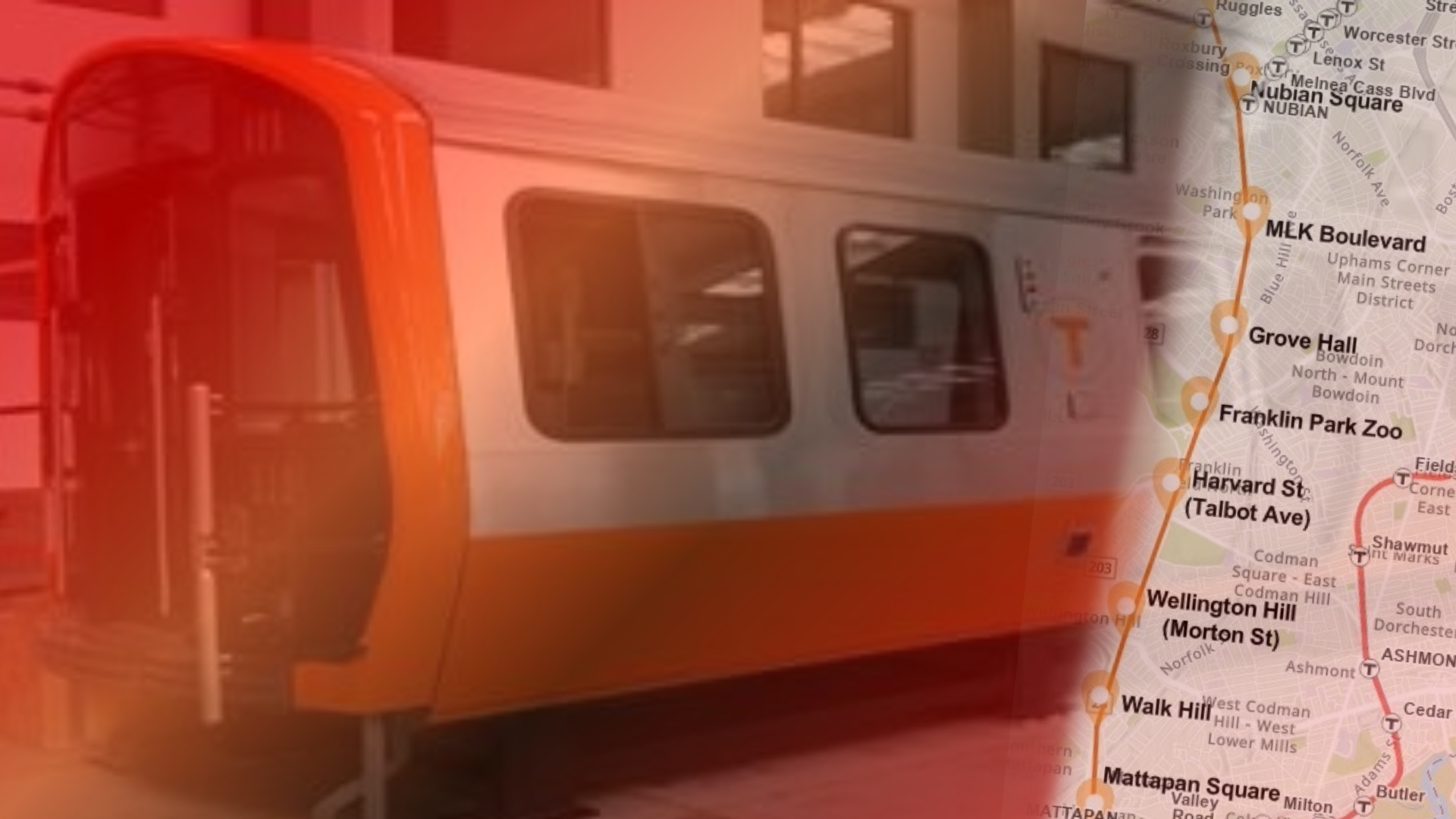
There is also a long history behind these questions. Blue Hill Avenue once had streetcar service. For decades, there have been talks about better rail service in this part of Boston. Today, other parts of Massachusetts have seen major rail projects while communities around 02119 and 02124 are still mostly talking about buses.
Bus investment matters. Thousands of people depend on buses and deserve safe, fast, and reliable service. But better buses and new rail service are not the same thing. After waiting for so long, people have a right to ask why some communities get major new transportation projects while Black Boston keeps waiting.
ACCOUNTABILITY DOESN’T MEAN ANTI WU
We have to stop acting like asking someone a hard question means we are against them.
I can respect things Mayor Wu has done. I can support work that helps immigrant families, working people and communities of color. And I can still ask hard questions.
Both can be true.
The Wu administration has said the way the City handles some street projects needs to improve. There have been changes in leadership, and the City and MBTA are talking with the community again about Blue Hill Avenue.
That is important. But after years of meetings, we need to ask more than, “Did you talk to the community?”
We need to ask: “What changed because you talked to the community?”
What did people ask for? What did the City accept? What did the City say no to? What changed in the plan, and why?
Show us.
That is how you build trust. That is accountability in action.
BLACK LEADERSHIP HAS WORK TO DO TOO
We cannot put everything on City Hall. Black Boston has to look at ourselves too.
We have elected leaders, pastors, business owners, activists, organizers, community leaders, young leaders and elders doing important work. And I believe we agree on more than we disagree.
We want safe neighborhoods, good schools, better jobs, Black homeownership, strong Black businesses, affordable housing, good transportation, and opportunities for our children. We want Black families to be able to stay and grow in Boston.
Where we often disagree is how we get there.
That is okay. Black people do not have to think the same way or support the same people. We are not a monolith!!! Some residents are in favor of the center bus lane. But there is a difference between having different ideas and being divided.
We should be able to agree on some basic goals for Black Boston. We should be able to say, “These things matter to all of us.”
If we cannot agree on what we are fighting for, it becomes much harder to hold government accountable for delivering it.
THIS IS BIGGER THAN BLUE HILL AVENUE
Blue Hill Avenue is where we are having this conversation today, but this is about something much bigger.
When government says, “We heard the community,” we should ask who they heard.
Was it the bus rider? The homeowner? The renter? The business owner? What about the person who went to every meeting? What about the person working two jobs who could not attend? What about our young people who will live with these decisions for years?
All of those voices matter.
And underneath all of this is one big word: trust.
Black Boston did not lose trust overnight. It happened after years of plans, promises and investments that changed, disappeared or never reached our neighborhoods the way people were told they would.
Mayor Wu inherited that history. She did not create it. But every mayor also inherits the work that was never finished.
Her administration has a chance to show Black Boston that things can be different.
We have work to do too. We have to show up, vote, organize, read the plans, ask questions, and learn how decisions are made. We also have to hold people accountable, even when we like and support them.
BEYOND SOUND BITES AND PHOTO OPS
We are living in a time when many programs and policies important to Black communities are under attack across the country. That makes what happens here in Boston even more important.
Our confidence in the commitment to Black Boston has to go beyond sound bites, talking points, and photo ops from ALL ELECTED OFFICIALS!!!
Representation matters. Having Black people in the room matters. But being in the picture is not enough.
We want to see results.
Who owns? Who builds? Who gets the jobs and contracts? Who gets to stay in Boston? Who gets pushed out? Are Black businesses growing? Are our children getting opportunities? Are our neighborhoods safer? Is transportation getting better?
And when Black people show up and take part in the process, what changed because we were there?
Those questions are not anti-mayor. They are not anti-government. They are not anti-progress.
They are accountability questions.
Mayor Wu did not create the problems Black Boston has faced for generations. But her administration has a responsibility not to repeat them. We have a responsibility too.
We can disagree about how to get there without forgetting where we are trying to go. We can support elected leaders and still question them. We can celebrate some progress and still demand more.
Because this is not just about a mayor or a general manager and the Federal Transportation Authority. It is not just about one elected official or one bus lane.
It is about whether Black Boston can see our voices reflected not only in the people sitting at the meeting, but in the decisions made after the meeting ends.
The PEOPLE. The process. The policy.
All three matter. Asking questions when they do not line up is not creating division; it’s creating the process, based on the people being valued in the process while creating the policy.
That’s accountability in action.