
by James “Jimmy” Hills
(5-minute read)
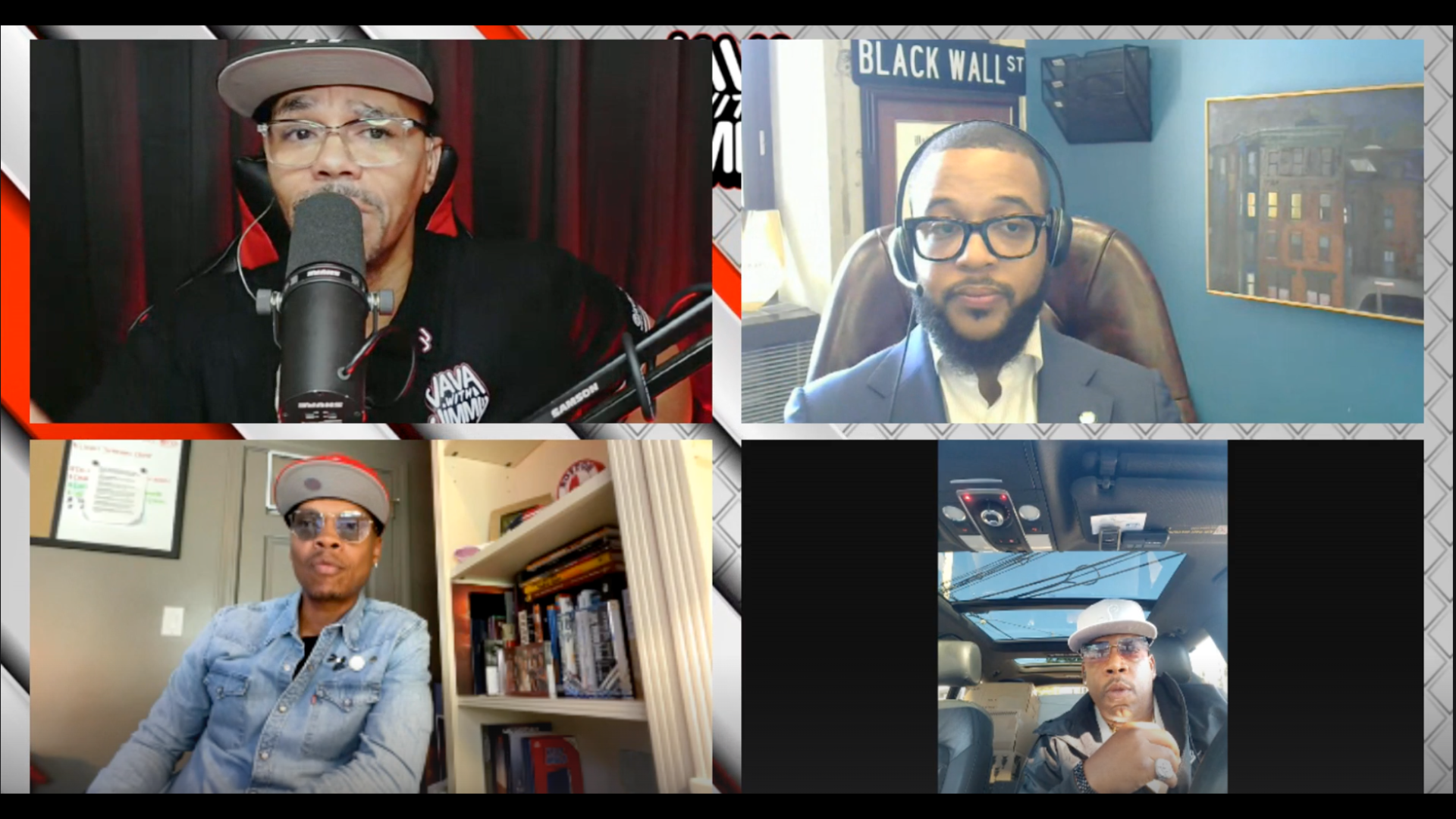
One year ago today, I sat down on Java With Jimmy to talk about For the Culture Week, and like a lot of conversations on Java, it became about much more than the event.
We talked Boston. Black culture. Black businesses. New Edition. Black men. Fatherhood. Mental health. Healing. Ownership. And most importantly, the need for spaces where we can simply experience Black Joy.
And a year later, I keep thinking about how important those spaces are … especially now.
When our history, contributions, and culture are constantly being challenged, debated, or minimized, and in many cases, erased, Black spaces matter. Not because we are trying to exclude anybody. Black Joy has never required that. But there is something powerful about having spaces where our music, art, food, history, creativity, and experiences don't have to be added onto somebody else's program.
We get to be the program. Last summer, we were the program.
Last Summer Felt Different
On August 27, 2025, then-Boston Chief of Economic Opportunity and Inclusion Segun Idowu joined me with New Edition's Ronnie DeVoe and Michael Bivins.
Segun called it possibly “the Blackest summer” Boston had seen in his memory. He talked about Black Market Nubian, BAMS Fest, the Family Reunion, the Roxbury Unity Parade, and the many people who had already been creating Black cultural spaces throughout Boston.
Then came For the Culture Week.
The City officially designated August 25–31, 2025, as For the Culture Week, bringing together the return of an HBCU football classic after more than 50 years, Morehouse and Johnson C. Smith, a celebration and street naming for Roxbury's own New Edition, Black businesses, nightlife, and the 25th anniversary of Gospel Fest.
But something Segun said during that conversation feels even more important a year later.
He wasn't just talking about one good week. He talked about building a foundation, supporting the people already doing this work and eventually expanding that kind of energy across the summer.
Today, Segun is no longer with the City of Boston. His last day as Chief of Economic Opportunity and Inclusion was February 27, 2026. When we talked briefly today, he simply said, “The intentionality was different”. He also mentioned that a lot of the funds raised last year were presumably redirected to FIFA events.
So I have to make the observation:
I'm missing some of that For the Culture energy this summer!!!
FIFA Was Great — And I Can Still Miss This
Now, before somebody starts typing — FIFA was great.
Boston hosted a major World Cup experience this summer, including a 16-day FIFA Fan Festival at City Hall Plaza, neighborhood activities, local performances, and cultural programming. Danm it, I co-hosted two events. The city was alive, people were here from around the world, and it was a great experience for Boston.
I enjoyed it.
But FIFA and intentionally amplifying Black Boston are two different things.
Last summer, Black culture wasn't simply included in something larger. For a moment, Black culture was driving the moment. We were the moment!
HBCUs. New Edition. Gospel music. Black businesses. Black nightlife. Black history. Black Boston moving throughout Boston.
We've certainly had Black events and Black Joy this summer, but I don't feel that same connected, intentional amplification.
That's not an accusation. It's an observation.
And I miss it.
It Was Never Just About a Party
That 2025 conversation also reminded us why these spaces matter beyond entertainment.
Ronnie and Mike talked about coming from Roxbury and taking New Edition around the world while continuing to give back at home. Michael talked about people doing good work without needing cameras or headlines. Ronnie talked openly about counseling, marriage, and the importance of getting help when you need it. Both talked about Black men, fatherhood, family, and breaking cycles.
They also talked about Boston's history.
Ronnie remembered a Boston where Black kids traveling into certain neighborhoods needed police escorts. Mike talked about the Charles Stuart case and what happened to Black communities after Stuart falsely blamed a Black man for murdering his wife.
So when I talk about Black Joy, I'm talking about memories, wellness, economics, ownership, healing, family, creativity, and unlimited possibilities of our creativity.
Give Thaddeus Miles His Flowers
And you cannot have this conversation in Boston without acknowledging Thaddeus Miles.
Long before “Black Joy” became something everybody wanted to put on a flyer, Thaddeus was intentionally creating space for Black people to experience wellness, community and joy.
The idea for his BlackJoy Project grew after he saw a 2019 photograph of himself laughing with other Black men and realized how rarely we see those images centered. He launched the project in early 2020, creating programming focused on celebrating and documenting Black Joy.
For years, Thaddeus has helped create spaces that remind us that wellness isn't only about what we're surviving.
It also has to be about what makes us want to live, create, laugh, and connect.
And that work continues.
On September 10, 2026, we will gather at the Institute of Contemporary Art for Black Joy Java, a collaboration with Thaddeus and the Black Joy Project, Java With Jimmy and the Coalition for a Resilient and Inclusive Waterfront for Boston's seventh annual Black Joy Day. The evening will bring together music, poetry, comedy, conversation, and community with Amanda Shea, Aric B., Jonathan Gates, TROY Frost and Jeff 2Timez.
And maybe that's the message for me one year later.
We should absolutely expect our institutions and our city to continue making space for Black culture.
But we can't always wait for somebody else to create it.
So to the artists, musicians, writers, poets, dancers, podcasters and creatives:
Keep making the art.
Keep telling our stories.
Keep creating spaces where we can laugh, heal, celebrate, and see ourselves.
Keep percolating. Keep brewing Black Joy.
Because especially in a time when our culture feels under attack, Black Joy isn't ignoring the fight.
Sometimes Black Joy is what gives us the strength to keep fighting.